The first rule of spotting a Kirk’s Dikdik in the vast plains of the Maasai Mara National Reserve is simple — stop looking for big animals.
Most safari guests arrive in the Mara with dreams of thunderous wildebeest crossings, lions draped across termite mounds, or elephants moving through the golden grass like ancient caravans. Few imagine that one of the reserve’s most captivating residents stands barely knee-high, weighs less than a suitcase, and can disappear into a thorn bush faster than a whispered secret.
Yet the Kirk’s Dikdik has a way of stealing the show.
I usually notice them before my guests do. Years in the bush teach you to read tiny movements — the twitch of a leaf beneath an acacia, the flicker of oversized ears in tangled scrub, or the sudden stillness of a creature trying very hard not to exist. Then, almost magically, the little antelope reveals itself.
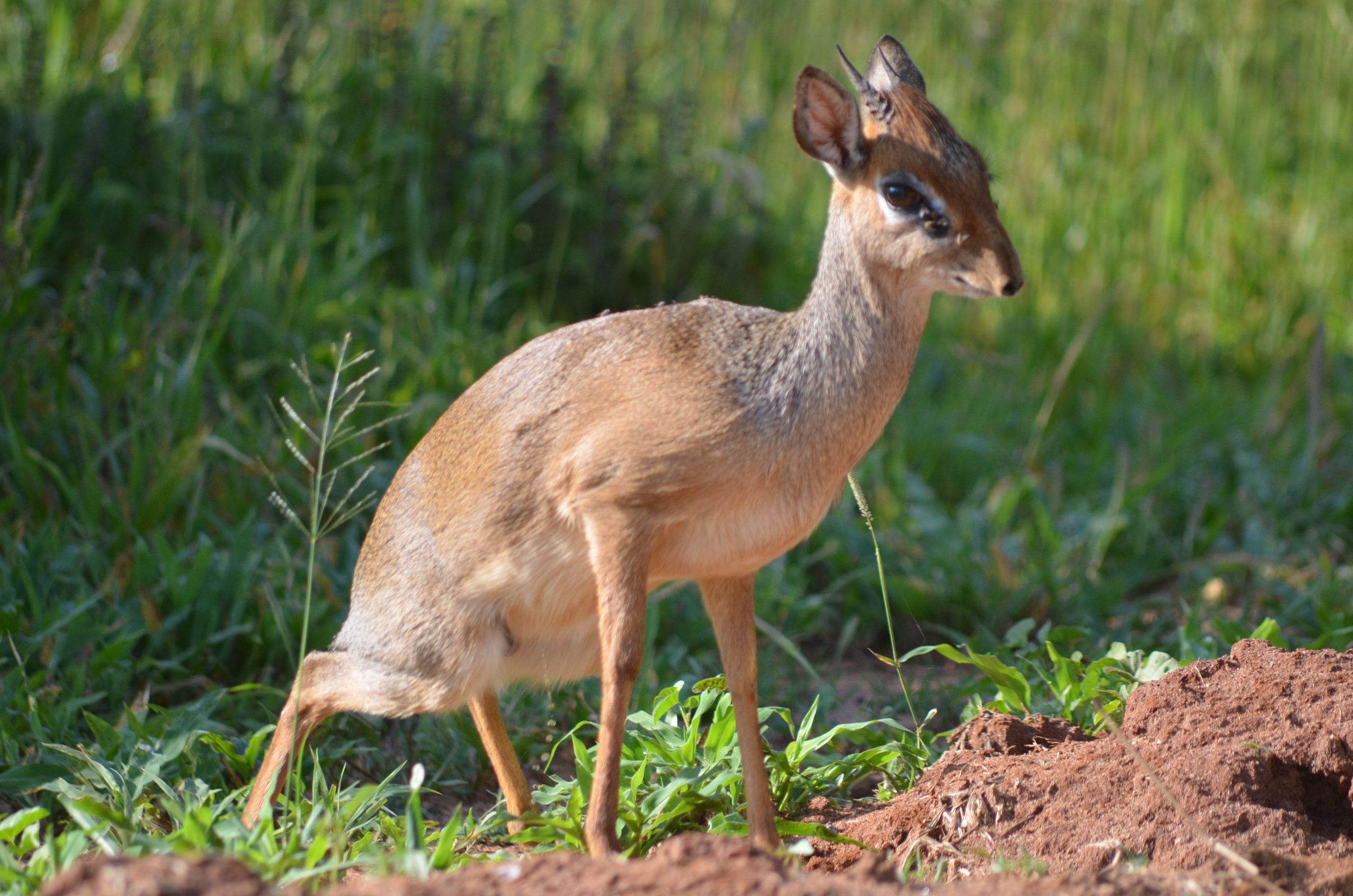
There it stands, impossibly delicate, balanced on pencil-thin legs with a pointed snout and enormous dark eyes rimmed in white. Its coat mirrors the Mara itself — soft grey dusted with warm ochre and reddish tones that melt perfectly into the dry bushland. The males wear short ridged horns no longer than a finger, but there is nothing timid about them. Dikdiks may be tiny, but they carry themselves with the alert confidence of animals that have mastered survival in dangerous country.
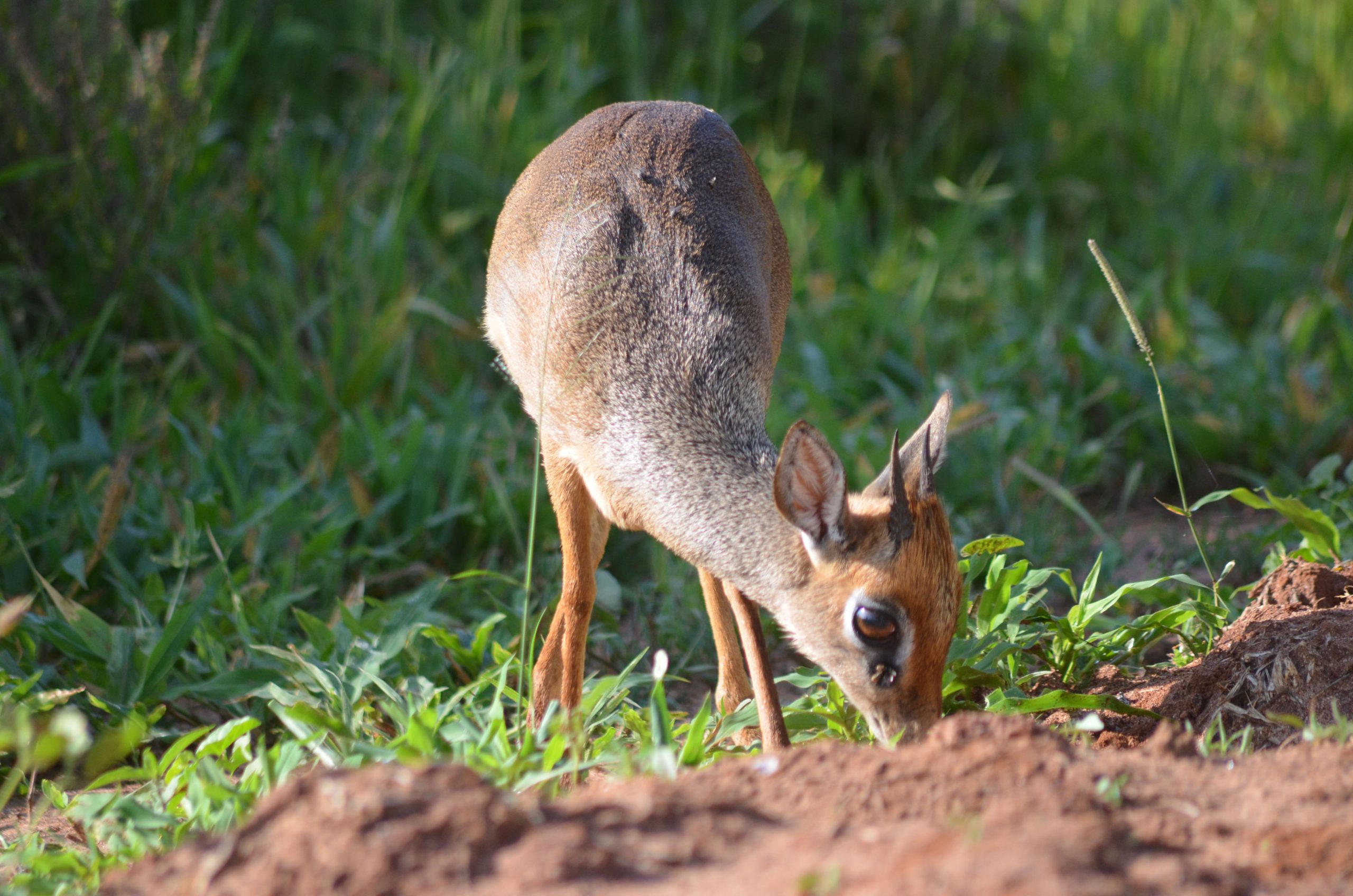
Unlike the larger antelope scattered across the plains, Kirk’s Dikdiks prefer intimacy over crowds. They live in devoted pairs, carving out tiny territories among acacia thickets, rocky scrub, and dense undergrowth. Once bonded, the male and female move through life together almost constantly — feeding side by side, resting together, and vanishing into cover at the slightest sign of trouble.
And in the Mara, trouble is never far away.
Leopards drift silently through the same thickets. Jackals patrol the edges of the bush at dusk. Martial eagles scan the ground from impossible heights. Every shadow could hide danger, which is why the dikdik survives through nervous brilliance rather than brute strength.
Then comes the sound that gives the little antelope its character.
A sharp whistle suddenly pierces the stillness of the bush.
Guests often freeze, searching the trees for some unseen bird, only to realise the alarm came from the dikdik itself. The whistle is both warning and distraction — a tiny siren announcing that a predator has been spotted. Females and young immediately dive for cover while the male keeps calling, confusing the hunter and alerting every creature nearby that something deadly is on the move.
Even their habits carry a touch of comedy.
One local tale tells of a dikdik stumbling upon a mound of elephant dung and defiantly adding its own tiny pellets on top every day, convinced that one day the elephant would eventually trip over the growing pile. Around campfires in the Mara, that story never fails to earn laughter, partly because it perfectly captures the spirit of the animal — absurdly small, endlessly determined.
Despite their fragile appearance, Kirk’s Dikdiks are remarkably adapted to life in harsh country. They browse on tender shoots, herbs, succulents, and evergreen leaves hidden deep within thorny vegetation. Waterholes are optional; moisture from plants is often enough to sustain them through the dry season. While larger animals battle for access to rivers and marshes, the dikdik quietly survives in the shadows, unnoticed and unbothered.
Perhaps that is what makes them so unforgettable.
The Mara is filled with creatures that demand attention through noise, power, and spectacle. The Kirk’s Dikdik does the opposite. It invites you to slow down, to notice the hidden corners of the wilderness, to appreciate the lives unfolding beneath the acacias while the rest of the safari world races after predators.
And long after the lions, elephants, and cheetahs blur into memory, many guests remember the tiny antelope that paused in the morning light, stared back with enormous curious eyes, gave a sharp whistle into the wind, and vanished into the bush as though the Mara itself had quietly swallowed it whole.
Our passion for nature and travel is reflected in our understanding of the need to experience the natural environment in a sustainable and unique way.
Our commitment to you is “The Perfect Balance between Nature & Discovery, Adventure & Luxury”.