Experience the serenity of more than 2,500 acres of trails and a walk around through gladesand under tall canopies of a mix of indigenous and exotic trees. Karura Forest provides a quiet and serene environment for bird watching where you can identify at least 30 species of birds or more in a single trip. Look out for rare and uncommon species such as the Red-billed Duck – U, White-backed Duck –U, Spur-winged Goose - Great Cormorant – U, Great White Pelcan – U, Pink-backed Pelican – R, Common Snipe – U, Common ringed Plover – U, and the Ruff – U. Situated in the northern part of Nairobi city, Karura Forest is 1,041 hectares, making it one of the largest urban gazetted forests in the world. The forest holds nearly all…
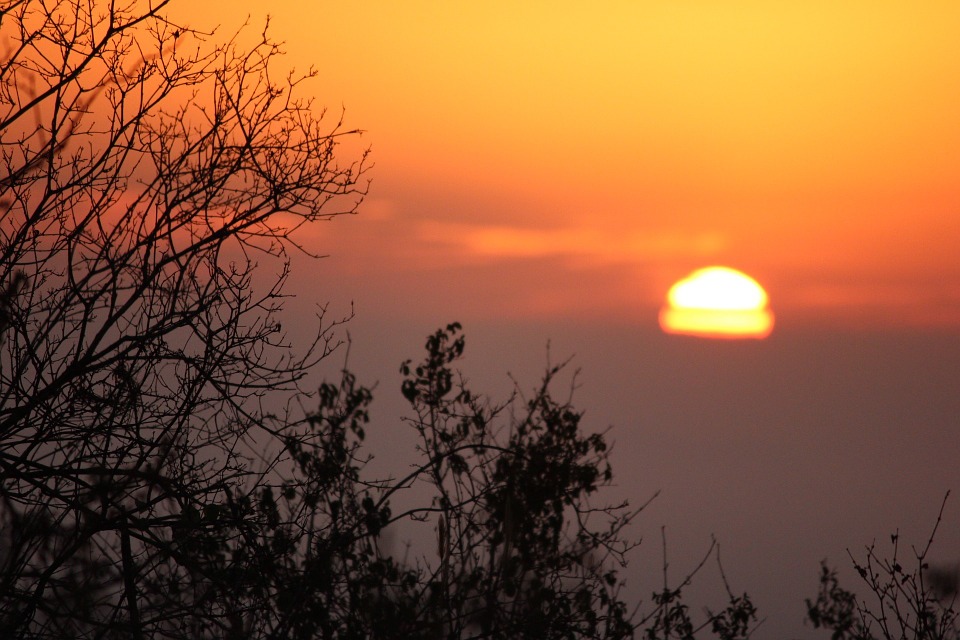
As we approached Nairobi National Park, the sun began to cast a golden glow across the sky. We were entering through the Main Gate, located just off the Lang'ata Road. With our backs to the city, it was easy to forget we were only a few kilometers from an international airport. The bush land in front of us stretched almost as far as the eye could see; dusty, flat, and rich in flora and fauna. With our backs to the city, it was easy to forget we were only a few kilometers from an international airport It was surreal and quite beautiful to witness the harmony of man and nature in a way that few people get to see. Zebras stood shoulder to shoulder with their backs to us, watching…
A lot of consideration goes into providing a high-end safari product, from expert guiding and activities to the standard of accommodation and wildlife experience. Welcome to Siana Spring Tented Camp. Siana Spring Tented Camp is situated at the foot of Ngama Hill, on the western side of Kenya's Masaai Mara National Park. The camp is located near the Sekenani and Ololaimutiek gates in an area rich in flora and wildlife as well as rich local culture. Siana Springs means "plenty springs" in the indigenous Maasai language. The Camp exemplifies the finest in diversity in all aspects, as its wealth in animals and natural history makes it a perfect eco-lodge from which to see one of the world's most spectacular spectacles - the wildebeest migration. Previous Next The Camp has a…
I must confess that I was once a skeptic of online booking platforms. Living in an age of cyber crime had put me off the idea until I was forced to do so on a recent trip. When I booked online, I realized how simple the entire process is, as well as the perks one gets from the experience. Here are some advantages: It is practical No more standing in long lines or filling out forms. Online bookings, whether for a holiday or an excursion, are quick and easy. From the palm of your hand, you can book your dream safari to the ideal destination. It is less expensive Did you know you get discounts when you book online? Online bookings allow travelers to compare prices for various safari packages…
As we approached Nairobi National Park, the sun began to cast a golden glow across the sky. We were entering through the Main Gate, located just off the Lang'ata Road. With our backs to the city, it was easy to forget we were only a few kilometers from an international airport. The bush land in front of us stretched almost as far as the eye could see; dusty, flat, and rich in flora and fauna. With our backs to the city, it was easy to forget we were only a few kilometers from an international airport It was surreal and quite beautiful to witness the harmony of man and nature in a way that few people get to see. Zebras stood shoulder to shoulder with their backs to us, watching…
The visitor's book at Treetops Hotel, NyeriOn February 6, 1952, Princess Elizabeth’s life changed forever.Together with her husband Prince Philip, they were staying in Treetops, a game-viewing lodge built in a tree in Aberdare National Park, when her father died and she became Queen. She was just 25-years-old.It was actually the next day at Sagana Lodge, 20 miles away, that she heard the news, but it is Treetops Hotel that has become synonymous with the event. The lodge, known for its rustic design, was built in 1932, and sits right in the middle of an ancient migration route for elephants between the Aberdare Ranges and Mt Kenya National Park. Treetops sits close to a natural salt lick, allowing guests to see animals as they come to drink water and lick…
Along the shores of Kenya’s rivers and lakes, the Hamerkop rakes the muddy banks with its short, heavy bill, searching for frogs and fish. Occasionally, It also employs other tactics such as wiggling its feet in the mud to stir up the menu, and may even fly into the wind at low level and dip at the water’s surface to pick on unsuspecting fish. Dull brown, with a pale chin and throat, the Hamerkop is named for its unusual shape – the word “Hamerkop” meaning “hammerhead” in German, and aptly describes the bird’s profile with a prominent heavy crest at the back of its head. It belongs to the heron family. Although only about 30cm high, breeding pairs use twigs, mud, and grass to build the most remarkable permanent spherical…
The resonant thumping song of the Long-tailed Nightjar (Caprimulgus climacurus) through the dry air is a sound of blessing. The hot undulating desert landscape of sand-coloured sedimentary rocks are bare of greenery, except a few dead-looking bush punctuating the morning sunrays. The rufous-brown coloured bird, with an exceptionally long tail, makes its distinct call, a fast, mechanical trill; higher-pitched than similar calls of other nightjars. People are listening, watching. Should the bird land at the door of any of the doum-palm thatched homesteads that pop up every few kilometers in the vast horizon of sand, thorn trees, plains and hills; interspersed with scorched river-beds, sand pans, and volcanic hills, its a sign that rain is near. Animals will be quenched, satisfied. And for the Turkana people living in the deserts…
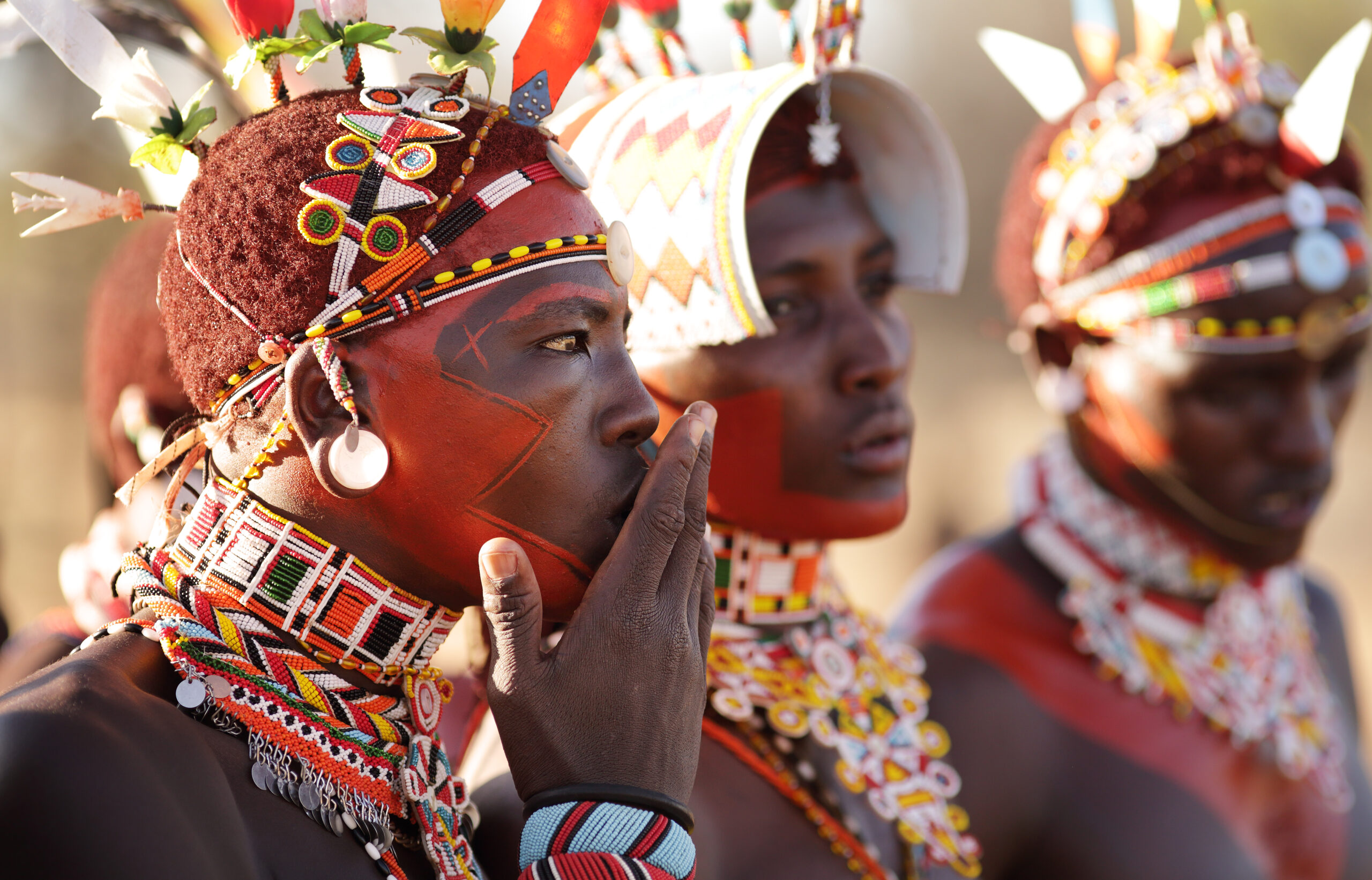
Northern Kenya is a wild frontier country inhabited by some of the toughest and most interesting people in Africa. Spartanish, tall and regal, these nomads belong to a mythical race of African ancient warriors who migrated south in the late 10th century, or from the lower Nile valley in about the 15th century. The Samburu are part of a migration of four language groups that included the Maa peoples (Nilo-Saharan language family), who first settled in the Laikipia and Loita highlands north of Mount Kenya. The Samburu people have over the years stuck tenaciously to their culture and are among the most culturally rich of Kenyan communities today. Their daily life activities are as fascinating as their elaborate traditions. As semi-nomadic pastoralists, the Samburu are closely related to the Maasai,…
The road trip from Nairobi to Maralal is an unforgettable drive through the Great Rift Valley and the Aberdare Ranges. The 348 km scenic drive to the small hillside market town lying east of the Loroghi Plateau within Samburu takes about 6 hours, and is home to the little known Kenyatta House. I recently toured this county and decided to visit and see it for myself. Kenyatta House is under the management of the National Museums of Kenya. Built in 1959, the three-bedroom bungalow sits on a 28-acre piece of land on the sides of a hill near Maralal and is under the management of the National Museums of Kenya. Historical records show that Kenya's founding President Mzee Jomo Kenyatta was detained in different jails in the harsh districts of…